Frequently Asked Questions
Q: Why do you trap stoats and rats?
A: After extensive research, the stoat has been identified as the main
predator of kiwi chicks. In the wild, only 5% of kiwi chicks survive
after the 1st 6 months of their life due to stoats and other
introduced predators
- like ferrets, rats, hedgehogs and feral cats and dogs. The DoC 150,
200 and 250 kill traps have been humane approved to ensure minimal
suffering to the target animal. For more information, about the
self-setting traps we
use, please click here.
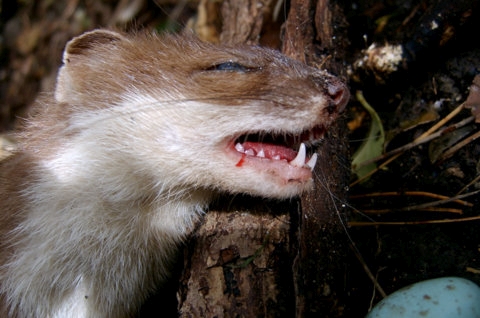
The arch-enemy of much of our native NZ wildlife, the stoat (mustela erminea) is an agile carnivore and carrion-eater that is able to climb trees to raid birds nests and go underground to attack kiwi chicks and eggs in their burrows. They also predate upon insects (especially weta) rodents, lizards, freshwater crayfish (koura), fish, rabbits and hares. Stoats are believed to be primarily responsible for the extinction of some species of indigenous New Zealand birds (Laughing Owl, Bush Wren and Native Thrush) and have certainly caused massive declines in the population of many other island and mainland bird species.
Accordingly, they have become 'enemy No. 1' for our legions of volunteer trappers.
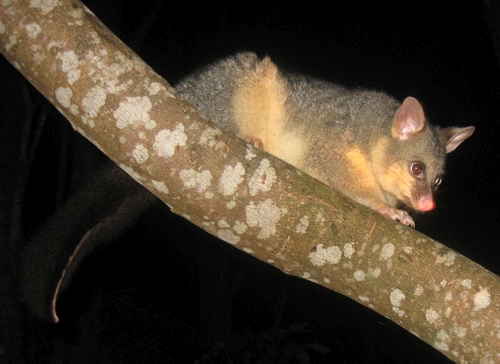
Q: In Australia, possums are a protected species; Why are they such an unwanted pest in New Zealand?
A: Like most introduced species into New Zealand, the Australian "possum" has been an ecological disaster for native plants and animals. Our NZ bush tucker suits them so well that, despite our efforts to control them, they have increased both in physical size and number to an estimated population of 40 million today! Since their introduction in 1837 to establish a trade for their fur, the Australian brush-tailed possums have competed with local fauna for food. As omnivores, they not only consume vast quantities of vegetation and berries - and often to the local extinction of their preferred dietary targets - but also they are known to raid birds nests and kiwi burrows for eggs and young chicks, eating native lizards, snails, worms, wetas and other insects. In short, they predate upon - and compete for food with - much of our native wildlife, to the extent that they threaten their very existence. In areas where possums have been eradicated or severely reduced in population, there is always a marked return of native birds and plants - as we have witnessed in the Rimutaka Forest Park.
Q: Can I take my dog into the Remutaka Forest Park?
A: Yes, but there are restrictions in certain areas, including the Kiwi Release area - where dogs are excluded and must be kept on a leash at all times on the adjacent tracks - and the Scientific Reserve, where dogs are prohibited from entry.
For more details, please refer to this DoC link. (Adobe .pdf format)
Q: Why do I need to keep my dog on a lead? S/he is a good dog; very obedient.
A: The scent of kiwi is almost irresistible to most dogs unless they have received "avian aversion training" specifically for kiwi. Unlike other birds, kiwi do not have a strong sternum (breast bone), so even a dog with a very soft mouth can fatally damage a kiwi.
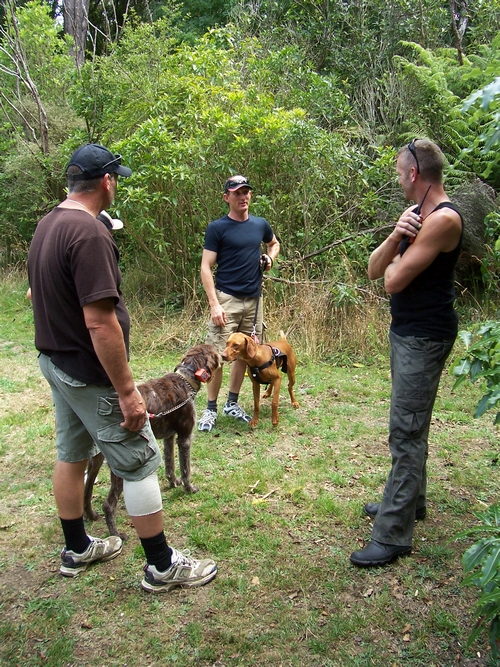
The Remutaka Conservation Trust provides regular Kiwi Aversion Training sessions for dogs every year.
Q. I would like more information about the huts for hire in the Remutaka Forest Park. Where should I look first?
A: You can view photos of and information about all of the DOC huts available for hire within the Remutaka Forest Park at the DOC website here: Lodges and Other Accommodation
Q: Where do I go to book a hut (a.k.a. bush cabin) in the Orongorongos/ Remutaka Forest Park?
A: You can make bookings over the Internet at this DoC website link.
Download the latest Info Sheet for Remutaka Forest Park Hut Hire from our Downloads page here: (Adobe .pdf format, 267kb.)
Q: I want to become a volunteer, but I don't want to trap or kill pest animals. How can I help?
A: There are many different roles and activities available for people, particularly on the administration/organisational part of the Trust's work, plus other projects, like tree planting or tunnel monitoring/ acoustic recorder monitoring. You don't have to be "super-fit" either, or indeed, have anything to do with the trapping network activities. So email volunteers@remutaka.nz to express your interest and get more information!
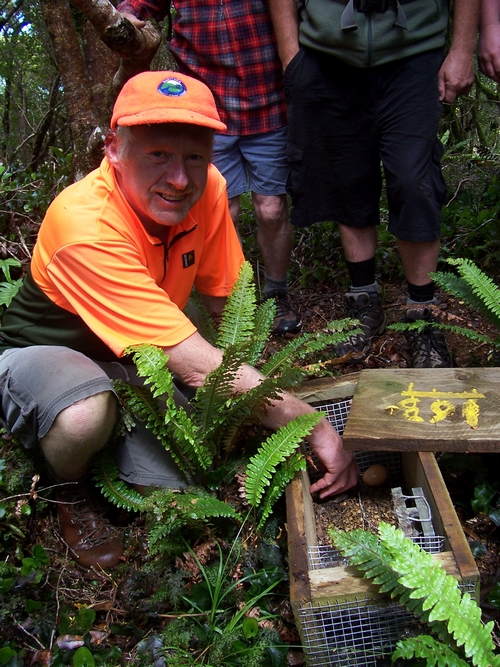
Stoat-trapper Simon checks a DOC 200 trap for 'customers' on the MSR-4
trap line whilst his 'band of merry men' look on.
Photo credit: PC.