News Archives
Here are some stories that reflected updates and press releases about the Trust's recent activities, achievements and special announcements.
Top Stories
Notice of Remutaka Conservation Trust Incorporated Annual General Meeting 2024
Date: 22 October 2024
Time: 7:30pm
Venue: Wellington Vintage Car Club
Halford Place, Petone (this is at the very end of Jackson St, Petone - adjacent to the Hutt River)
This notice advises of the 2024 Annual General Meeting of the Remutaka Conservation Trust Incorporated.
This meeting will be required to vote on a revised Constitution to meet the requirements of the new Incorporated Societies Act. These are intended to strengthen the governance and accountabilities of Societies.
A copy of the proposed compliant constitution (which was recently sent out to all current members) can be found for your perusal and voting consideration here:
Revised RCT Constitution - 2024
After the General Business discussion and formal meeting closure, attendees will be treated with an account of the latest results of our ongoing kiwi population monitoring from Susan Ellis, who heads up this project.
2023 Annual General Meeting
The AGM will be held on Wednesday 18th October at the Petone Library meeting room, commencing at 7.00pm.
Come along to hear how we managed our activities and the interests of the Trust through what has been a very interesting year. Hear about some of the changes we are making to the way we do business as we look ahead.
This year we will acknowledge and celebrate the amazing commitment from 4 volunteers who will be presented with their 20-year certificates. This is the first time in the history of the Trust for anyone to reach this milestone! The special people are Susan Ellis, Melody McLaughlin, Alan Thompson and Maarten Vink. There will also be volunteers recognised for reaching the 10-year milestone.
Guest speakers include Winfred Long, our trapping statistics analyst, and Gary Sue, from Hem of the Remutakas - now based at the Catchpool DOC Field Depot - on the work performed by this Jobs for Nature team along the southern coast of the Remutaka Range.
Kiwi Avoidance Training for Dogs - Remutaka Forest Park - May 2024
Notice from the KAT team
From:kat@remutaka.nz
Subject:
Kiwi avoidance training
- 18th & 19th May,
2024
Hi Dog Owners,
The Remutaka Conservation Trust has booked Kiwi Avoidance trainer Willie Marsh - and the Catchpool Centre - for Saturday 18th - and Sunday 19th - May, 2024.
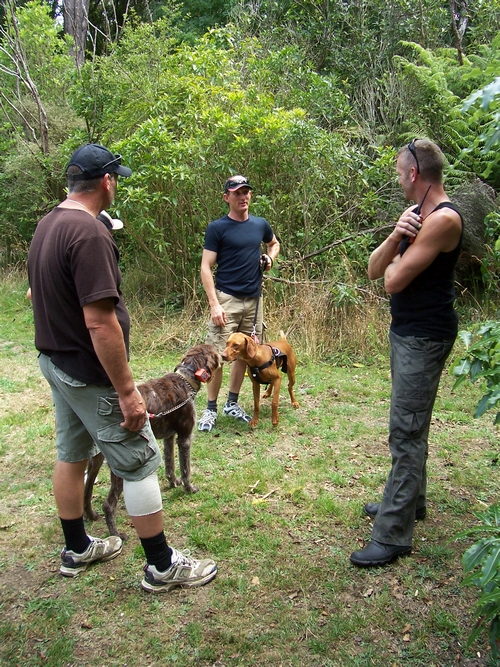
The training is carried out over a course with kiwi props, kiwi sound and kiwi smell. Willie uses a training collar on a low setting if he sees that the dog is showing interest in the kiwi by smell, sound or sight.
Owners accompany their dog on the course.
If you would like to be added to the mailing list, please email kat@remutaka.nz.
We will not take bookings until 2 weeks before that weekend, when an email will be sent out with an invitation to book and information on the training. This makes it easier for us to manage the bookings.
If you need to have your dog(s) trained before this date please contact Willie Marsh, from Woodville, at willymarsh@inspire.net.nz or 027 385 8191 to see what training he has planned elsewhere.
A reminder that dogs need to be on leads in the Remutaka Forest Park, even if they have been kiwi avoidance trained. This is a DOC ruling. The training is extra protection for the 200+ kiwi living - and spreading out - in the park.
Regards,
Rosemary Thompson and the KAT Team
Remutaka Conservation Trust
Minski does the right thing!
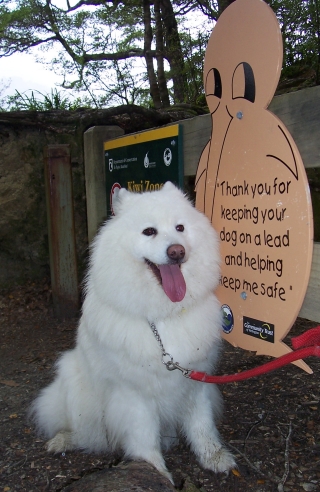
Without Avian Avoidance Training specific for Kiwi, even a well-trained dog (like Minski, the beautiful Samoyed displayed here) could potentially be a deadly hazard to our recently hatched chicks and adult, breeding kiwi, so please always keep your dog on a leash in the Remutaka Forest Park and especially in our designated Kiwi Zone! (Photo credit: PC)
2022 Annual General Meeting
The AGM was held on Wednesday 19 October at the Petone Library meeting room, commencing at 7.30pm.
Members came along to hear how we managed our activities and the interests of the Trust through what has been a very interesting year. Heard about the necessary changes we are making to the way we do business as we look ahead.
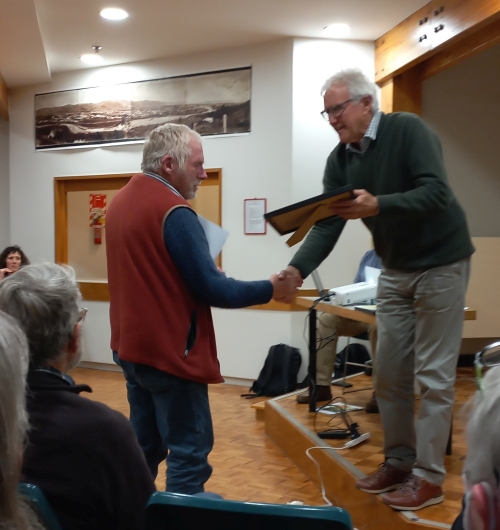
Outgoing president, Geoff Cameron presented another set of 10 Year Certificates to several volunteers, including Simon Grant (above).
We were also delighted to have Paul (Scratch) Jansen (DOC), as our guest speaker. Many years ago (2004) Scratch issued the Trust a challenge to reintroduce kiwi into the Remutakas. He was keen to catch up with us and discuss the wonderful success our kiwi project has become. Was he surprised by what we have achieved? Check out the Spring 2022 newsletter (linked above) for the answer.
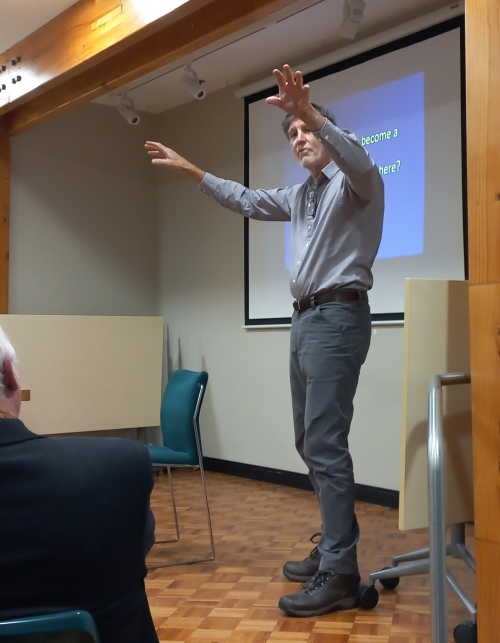
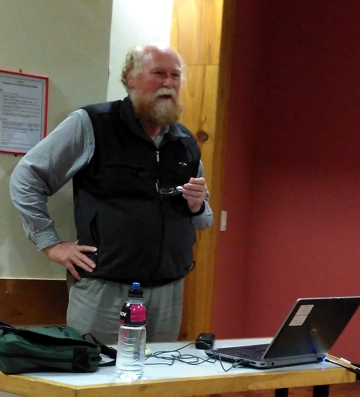
Paul (Scratch) Jansen of DOC presenting at
the RCT's 2022 AGM
Southern Remutaka Aerial Operation
Please be advised that the toxic phase of the Southern Remutaka aerial 1080 pest control operation will be undertaken tomorrow, Tuesday the 15th of November 2022 (weather permitting).
The operation is being carried out on behalf of TBfree for the purpose of enhancing biodiversity and eradicating bovine tuberculosis (TB) from New Zealand’s farmed cattle and deer and wild animal populations.
For a map please refer to the factsheet online: https://www.ospri.co.nz/tb-and-pest-control/pest-control-regions/aerial-operations/
Pesticide to be used: Sodium Fluoroacetate (1080).
Warning signs will be put in place. A reminder to please check for signage if you are in the area. And;
- DO NOT TOUCH poison bait
- WATCH CHILDREN at all times
- DO NOT EAT animals from the area
- Poison bait or carcasses are DEADLY to DOGS.
Observe these rules whenever you see warning signs about pesticides. The presence of warning signs indicate pesticide residues may be present in baits or animals. When signs are removed, this means you can resume normal activities in the area.
Please report suspected vandalism or unauthorised removal of signs. For any urgent queries you can contact our EcoFX office on 07 873 8130 or email: admin@ecofx.co.nz
The operation will have additional conservation benefits for our kiwi, other native birds and bush. Possums eat the forest canopy and prey on native birdlife, including eggs and chicks. The aerial treatment is also effective at controlling other introduced predators such as ship rats and stoats.
Please refer to the OSPRI factsheet here:
TBfree-Southern Remutaka Aerial Factsheet (.pdf format ~1.5Mb) for more in-depth information and a map of the area that will be treated.
Phases to the programme:
- Non-toxic prefeed cereal baits will be sown over the treatment blocks at an average rate of 1 kg per ha.
- Approximately 7 days later toxic 1080 baits will be sown over the treatment area at an average rate of 2 kg per ha.
Both phases are weather-dependant requiring 2-3 fine nights with minimal rainfall after application.
Southern Remutaka Aerial Operation
The long-awaited OSPRI aerial pest control operation is now set to recommence at the end of October 2022 in the Southern Remutaka zone. (Pre-feed Tuesday 8th November; Toxic treatment Tuesday 15th November)
This 2nd-ever treatment operation for the area was delayed due to extended periods of unsuitable weather conditions prevailing over the winter months.
It is now planned to recommence the aerial operation in early November 2022. This operation will help reduce the possum population to prevent the spread of bovine tuberculosis (TB).
The operation will have additional conservation benefits for our kiwi, other native birds and bush. Possums eat the forest canopy and prey on native birdlife, including eggs and chicks. The aerial treatment is also effective at controlling other introduced predators such as ship rats and stoats.
Please refer to the OSPRI factsheet here:
TBfree-Southern Remutaka Aerial Factsheet (.pdf format ~1.5Mb) for more in-depth information and a map of the area that will be treated.
Phases to the programme:
- Non-toxic prefeed cereal baits will be sown over the treatment blocks at an average rate of 1 kg per ha.
- Approximately 7 days later toxic 1080 baits will be sown over the treatment area at an average rate of 2 kg per ha.
Both phases are weather-dependant requiring 2-3 fine nights with minimal rainfall after application.
Mobile Cell-phone Coverage Now Available in the Catchpool
With thanks to Chris Bishop (MP) and the Wainuiomata Rural Community Association for championing this issue, cellular tower cover is available for the Remutaka Forest Park Catchpool Valley and surrounding rural areas at last.
Original Press release details here:
http://www.scoop.co.nz/stories/PA1911/S00057/mobile-coverage-confirmed-for-catchpool-valley.htm
This will be enormously beneficial, not only from a health and safety perspective, but also for our Catchpool Volunteer Project work down there. It also means we may be able to take advantage of new trap and field camera monitoring systems that rely on dependable cell-phone connectivity in the future.
Edit Update - May 2022:The Rural Connectivity Group are planning to install a cell-phone tower on the Cattle Ridge Road. Installation is planned within the coming 6 months. After that we expect cell phone
coverage for most of the park, making any activities in the park safer and immediately Instagrammable. (Source: Elly Peters, DOC).
Key message: Until then, Don't rely on cell phone coverage being available in the Catchpool Valley,
except on the ridgetops that have line-of-sight with more distant Wellington or Hutt Valley cellular towers.
Annual General Meeting
The 2021 Annual General Meeting of the Remutaka Conservation Trust was held last night (13/10/21) at the Petone Library in Lower Hutt.
Due to Covid-19 Level 2 restrictions on the room capacity, there was a relatively a small turn-out of members at our AGM.
Following the presentation of our President's Annual Report, our financial reports, and the election of a Management Committee for the next year, there was discussion of other items of general interest.
Guest speaker Paul Ward, from Capital Kiwi, delivered an excellent update on that exciting project to achieve their vision towards restoring a large scale kiwi population to "Wellington's backyard".
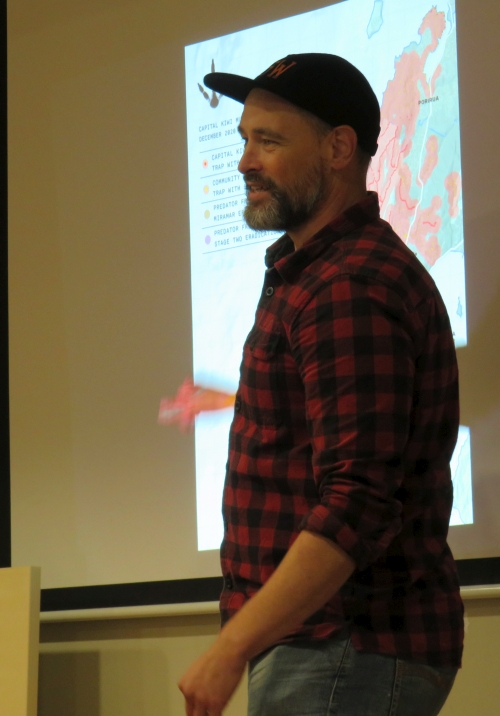
Paul Ward of Capital Kiwi enthusiastically presenting his update on their exciting project to restore a population
of kiwi to Wellington's "backyard". Photo credit: PC.
Notice of Annual General Meeting
The 2021 Annual General Meeting of the Remutaka Conservation Trust will be held at 7.30 pm on Wednesday 13th October, at the Petone Library.
The agenda will include presentation of our annual report, our financial reports, and election of a Management Committee for the next year. There will also be the opportunity to raise and discuss other items of general interest.
We are delighted to advise that our guest speaker will be Paul Ward, from Capital Kiwi. Come along and hear Paul talk about the progress Capital Kiwi are making towards achieving their vision of restoring a large scale kiwi population to "Wellington's backyard".
COVID 19
Please note that the AGM will be subject to whatever Covid 19 restrictions are in place at the time.
- At Levels 3 or 4 the AGM will be postponed.
- At Level 2 the AGM will go ahead but we will need to restrict numbers and observe whatever rules are in place regarding social distancing and the wearing of masks.
- At Level 1 there may still be some restrictions in place.
RSVP
To enable us to monitor numbers we ask that anyone planning to attend the AGM advise the Secretary.
Notice to Remutaka Trappers/ Volunteers
Reminder:
The stag roar has started - or is about to start - and will last over the next few weeks in the Remutakas.
With this comes hunters in and out of the park after that elusive stag head or trophy. Given COVID-19 lockdowns also curtailed events last year, there may be many more hunters than usual out and about.
You have all been issued with high-viz clothing; Please wear it.
If you do not still have your high-viz vest and beanie, please let Melody McLaughlin know A.S.A.P. for replacement(s).
If you are not comfortable going in to the Park during this time, then please don’t. The beasties can wait. Your safety is more important. This is particularly relevant for those of you who have trap-lines not on standard tracks and for kiwi handlers/ trackers.
Thank you!
Kiwi Avoidance Training for Dogs - Remutaka Forest Park 2022
Notice from the KAT team
From:kat@remutaka.nz <kat@remutaka.nz>
Sent: Wednesday, 23 March 2022 12:22 pm
Subject:
Kiwi avoidance training May 22
Hi dog owners,
The Remutaka Conservation Trust will need to postpone the usual May 2022 kiwi avoidance training as OSPRI are planning a possum control operation in the Southern Remutakas, some time in May 2022. The recommendation is no dogs in the Park for 6 months after this has occurred...
If you need to renew or get a certificate for kiwi avoidance training for your dog/s for hunting (in other areas) please contact one of the following certified trainers:
Jim Pottinger from National Park - 021 259 8299 - or
Willie Marsh from Woodville - 027 385 8191, willymarsh@inspire.net.nz
to see what training they have planned.
Apologies for the inconvenience; we will look to arrange further training in mid/late 2023
Regards,
Rosemary Thompson and the KAT Team
Remutaka Conservation Trust
Kiwi Avoidance Training - October 2021
Kiwi Avoidance Training (KAT)
The KAT team booked our avoidance trainer, Jim Pottinger, for May and October 2021.
October dates as follows: (Friday 29th; Saturday 30th, and Sunday 31st October, 2021).
We will run the training at the Catchpool Centre, Remutaka Forest Park as usual.
Jim Pottinger is a very experienced trainer with a great understanding and empathy with dogs and owners. He uses a variety of visual aids and kiwi smell to train dogs to avoid kiwi. He treats the dogs with respect and discusses the training with owners to make sure they understand and are happy with the process.
A training collar is used on a low setting and is activated when a dog shows interest in either the kiwi smell or visual aids. Some owners have tried the collar on themselves as reassurance.
Once a dog has attended initial training it is important to keep the training up-to-date for your dog/s by coming back for a refresher.
Demand is very high - many dogs are already booked in, so please contact us urgently by email kat@remutaka.nz if you'd like to get your dog trained this month. We book in half-hour slots on a Friday, Saturday, or Sunday depending on demand.
Notice of Annual General Meeting 2020
The 2020 Annual General Meeting of the Remutaka Conservation Trust will be held at: 7.30 pm on Thursday 15th October.
The venue is room C116 on the Ground Floor of C Block, Wellington Institute of Technology, Petone. (Access to C Block is off Kensington Avenue, Petone.
The agenda includes presentation of our annual report, our financial reports, and election of a Management Committee for the next year.
There will also be the opportunity to raise and discuss other items of general interest.
Guest Speaker - Jim Lynch, QSM
We are also delighted to advise that the guest speaker at our AGM will be Jim Lynch QSM, the inspiration behind the founding and establishing of Zealandia. Come along and hear Jim talk about how he and his dedicated band of co-conspirators discovered a natural valley in the middle of suburban Wellington some 30 years ago and turned their dream into the highly successful eco-sanctuary we have now. We look forward to seeing you there!
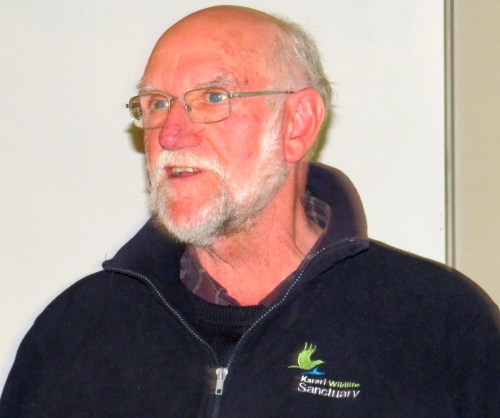
Guest speaker, Jim Lynch, speaking to
Remutaka Conservation Trust AGM 2020 attendees in October. Jim shared
some BIG new ideas he's working on, as well as providing a great account
of the outcomes of his previous magnum opus, Karori Sanctuary - or
Zealandia - as we Wellingtonians now proudly know it. Photos credit: PC.
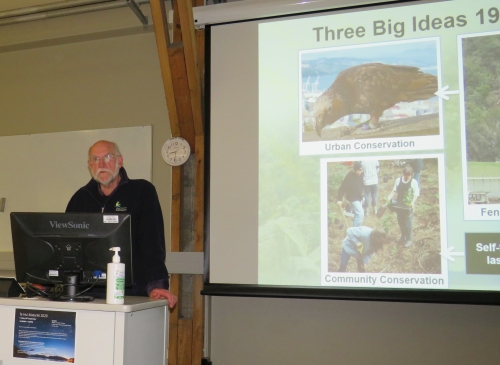
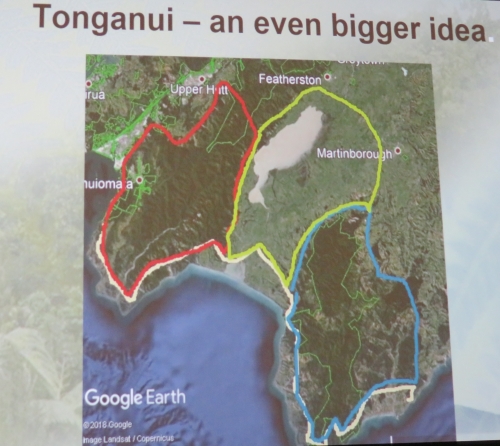
Big ideas from the 1990s - and now for the
2020s and beyond - including a large (~3350ha) fenced predator-free
sanctuary in the Wainuiomata Water Catchment bordering the Remutaka
Forest Park. Kākāpō and other threatened native birds will eventually be
released there.
2020 Annual General Meeting
The 2020 Annual General Meeting of the Remutaka Conservation Trust was held at the Wellington Institute of Technology, Petone, on Thursday 15th October. The agenda included presentation of our President's annual report, our financial reports, and the election of a Management Committee for the next year.
Guest Speaker - Jim Lynch, QSM
We were also delighted to welcome our guest speaker, Jim Lynch QSM, the inspiration behind the founding and establishment of Zealandia. We heard Jim talk about how he and his dedicated band of co-conspirators discovered a natural valley in the middle of suburban Wellington some 30 years ago and turned their dream into the highly successful eco-sanctuary we have now. And then he talked about some even BIGGER ideas he's incubating for conservation in the Wellington Region.
Annual General Meeting - 2019
The Rimutaka Forest Park Charitable Trust Inc. operating as:
Remutaka Conservation Trust
| Venue: | Petone Library Meeting Room |
| Brittania St |
|
| Date: | Wednesday, 30th October |
| Time: | 7.30pm |
Our grateful thanks to Grant Watt, who retired from the office of Trust Secretary last night. Grant has put in many years of great service to our community group in this role. He remains a Remutaka Conservation Trust member and will continue to help out with our CiviCRM system and FIXIT team.
New committee members welcomed last night were Esther King and Linda Olsen - both well-known to the Trust through previous community group liaisons and events. 2019 - 2020 Committee
The AGM was followed by a superbly informative and amusing
presentation from

Stephen Marsland is professor of mathematics
and data science in the School of Mathematics and Statistics at Victoria
University of Wellington. (Photo credit: Victoria University of
Wellington).
S
H
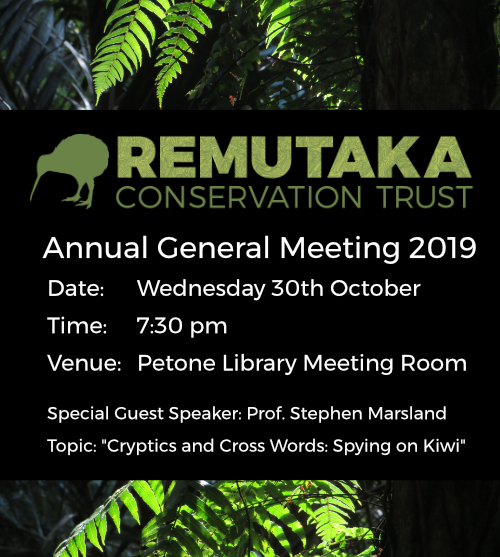
Notice for the AGM for Remutaka Conservation Trust
held on Wednesday, 30th Oct, 2019.
Canine Kiwi Aversion Training
Opportunity to get your dog(s) trained to avoid kiwi occurred twice in 2019, with two more sessions planned for 2020.
Specialist aversion trainer, Jim Pottinger, will put your dog(s) through a series of kiwi sensory experiences in an outdoor setting and teach them to avoid kiwi encounters.
Venue as usual will be the Catchpool Centre near the entrance to the Remutaka Forest Park down at the Catchpool.
Bookings are essential - To do so, please contact Rosemary Thompson via email at kat@rimutakatrust.org.nz to express your interest - or to seek further details - so that an invitation with a time to book in with your dog(s) on your preferred day that weekend can be sent via email in the week before the training event.
Goat Cull - Turere & Whakanui Catchments
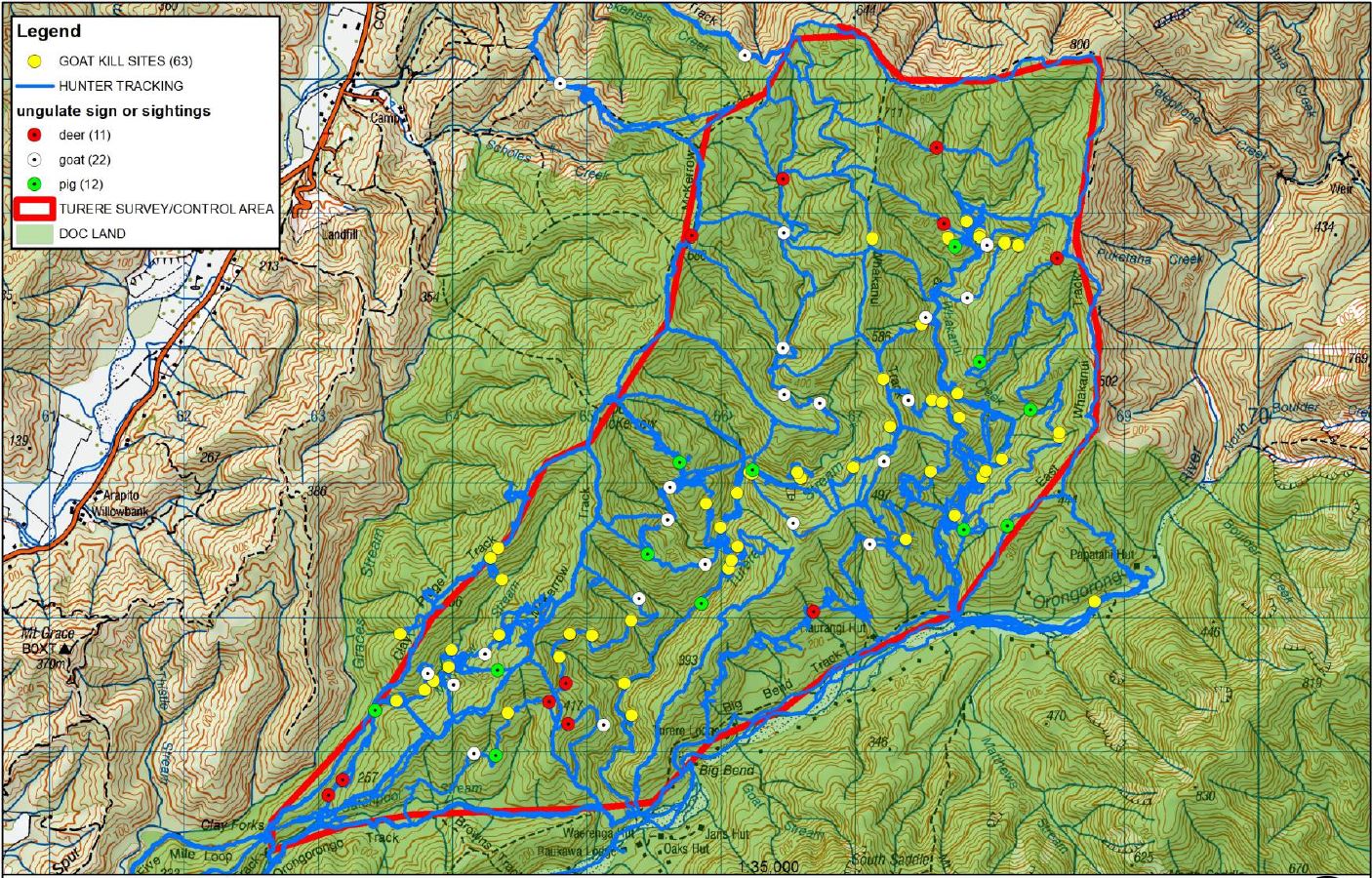
Map showing extent of recent ungulate control operation sponsored by DOC
in the Remutaka Forest Park. (Click for a larger image). Source: BCL
Report, June 2018.
Feral goats, pigs and deer do a huge amount of damage to native New Zealand forests, leading to the local extinction of many precious endemic plants and the wildlife communities dependent upon them.
The Department of Conservation recently commissioned Backcountry Contracting Limited (BCL) to conduct a low-intensity survey and operational sweep for goats and other ungulates in the core Remutaka kiwi territory made up of the Whakanui and Turere catchments.
63 goats were killed and a survey made of all goat, deer and wild pig sightings. The operation was delivered using 2 ground hunters with indicating, finder/bailer and indicating/bailing type dogs.
BCL made a number of helpful observations and recommendations to DOC following this survey. One was that there is a need to target ALL ungulate species in the control area, as well as in neighbouring catchments, to reduce the migration of feral pests into the area.
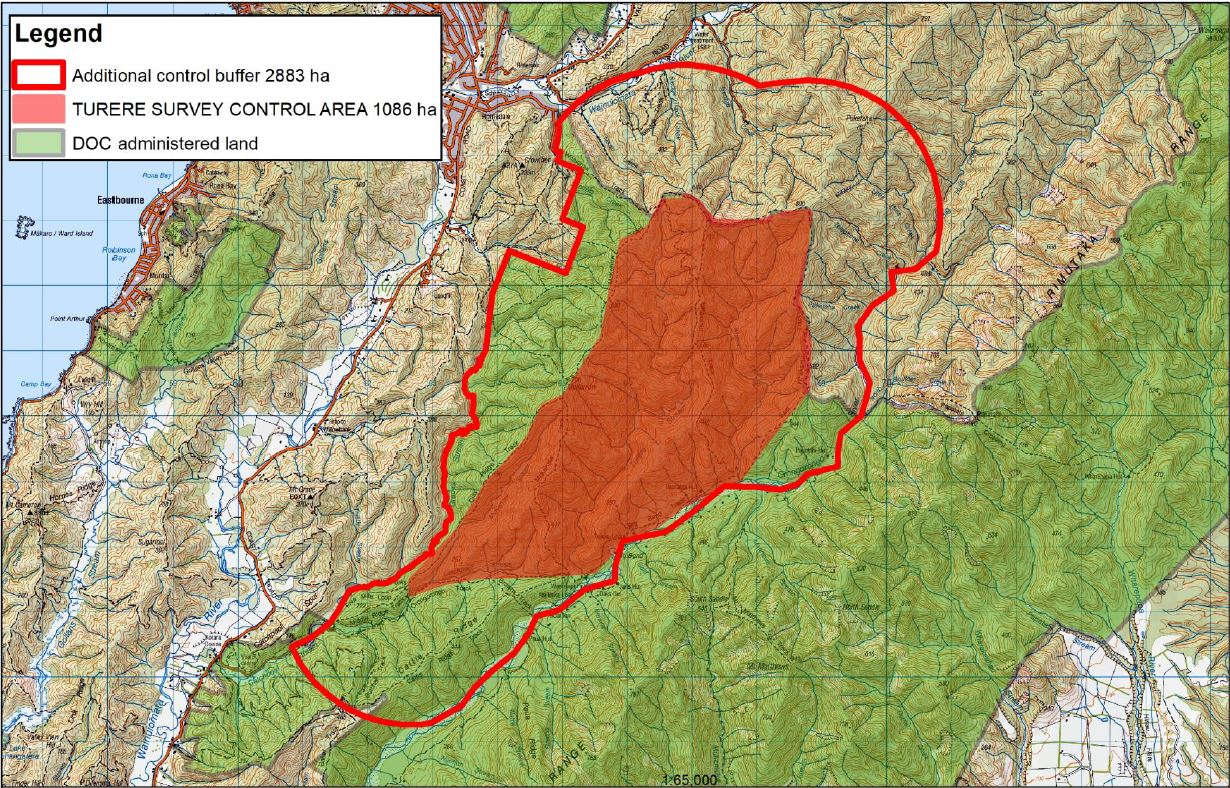
Map of suggested buffer zones and recommended extended ungulate
control - Remutaka Forest Park. (Click for a larger version) BCL Report,
June 2018
Mobile Cell-phone Coverage Coming to Catchpool?
With thanks to Chris Bishop (MP) and the Wainuiomata Rural Community Association for championing this issue, cellular tower cover is planned for the Remutaka Forest Park Catchpool Valley and surrounding rural areas at last.
Press release details here:
http://www.scoop.co.nz/stories/PA1911/S00057/mobile-coverage-confirmed-for-catchpool-valley.htm
This will be enormously beneficial, not only from a health and safety perspective, but also for our Catchpool Volunteer Project work down there. It also means we may be able to take advantage of new trap and field camera monitoring systems that rely on dependable cell-phone connectivity in the future.
Edit Update - May 2022:The Rural Connectivity Group are planning to install a cell-phone tower on the Cattle Ridge Road. Installation is planned within the coming 6 months. After that we expect cell phone
coverage for most of the park, making any activities in the park safer and immediately Instagrammable. (Source: Elly Peters, DOC).
Key message: Until then, Don't rely on cell phone coverage being available in the Catchpool Valley,
except on the ridgetops that have line-of-sight with more distant Wellington or Hutt Valley cellular towers.
Recent Hatches...
.jpg)
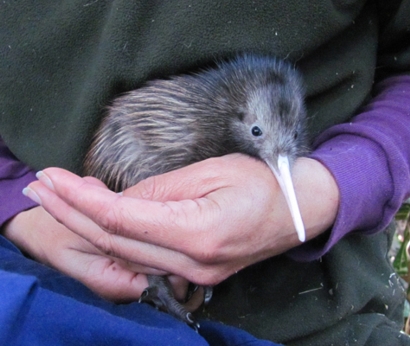
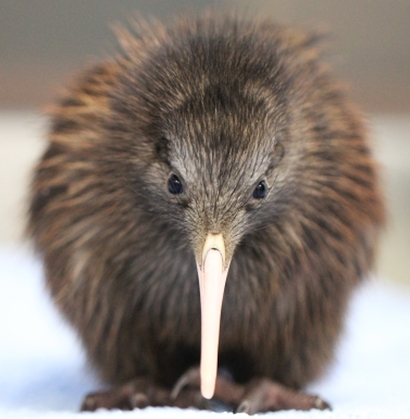
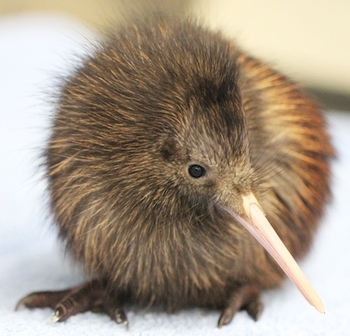
Kiwi chick, currently designated RFP48, being held by a staff member at the Pukaha Mt Bruce National Wildlife Centre hatchery soon after it hatched from its egg. Photo credit: @PukahaMtBruce
.jpg)
Another photo of kiwi chick, RFP48, being held up for show at Pukaha Mt Bruce. (Click any photo for a larger image...)
.jpg)
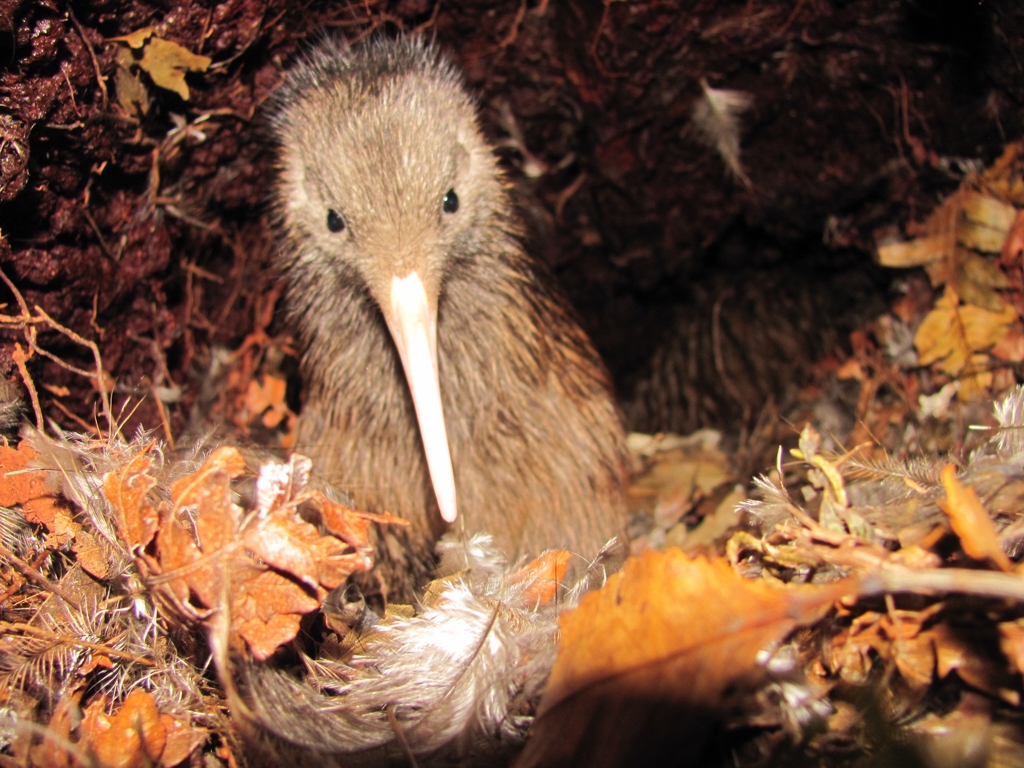
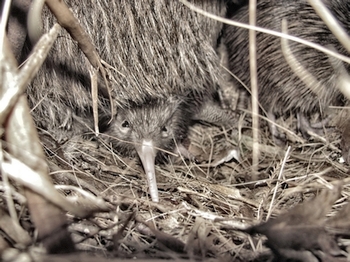
The meaning of 'cute' - a Remutaka Forest Park chick just a day
or so after it hatched from its egg at Pukaha Mt Bruce. #RFP47
Photo
credit: Pukaha Mt Bruce.
Recent visitors...
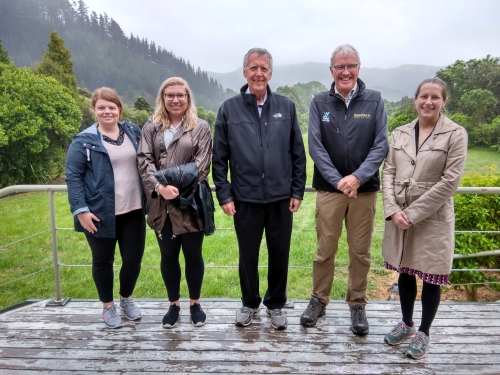
US Embassy (NZ) staff with visiting former Chief of United States Forest Service, Dale Bosworth and RFPT President, Geoff Cameron at the Catchpool Centre, Remutaka Forest Park.
Chief Bosworth is in New Zealand on an official US State Department
speaking tour, during which time he has visited many forestry-related
organisations and research institutions. We were delighted that he came
to visit us at the Catchpool on a somewhat damp Friday afternoon to
learn more about our conservation-related community volunteer efforts -
and to reminisce about forestry matters with another lifetime career
forester, Geoff Cameron.
Photo credit: PC.
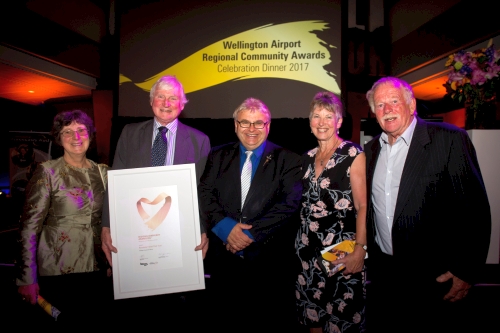
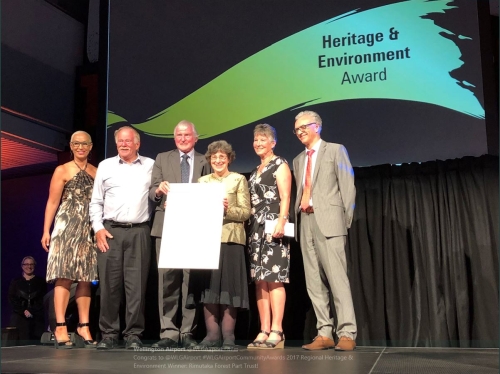
Trust members with Hutt City Council Mayor, Ray Wallace, at the finalist's dinner for the Wellington Airport Regional Community Awards, 2017. Photo credit: Wellington Airport.
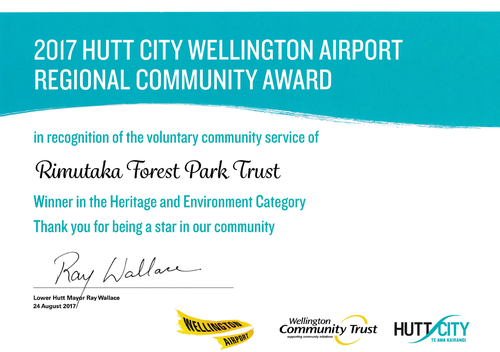
Rimutaka Forest Park Trust volunteers won the Heritage & Environment award at the 2017 Hutt City Wellington Airport Regional Community Awards too. Well done team!
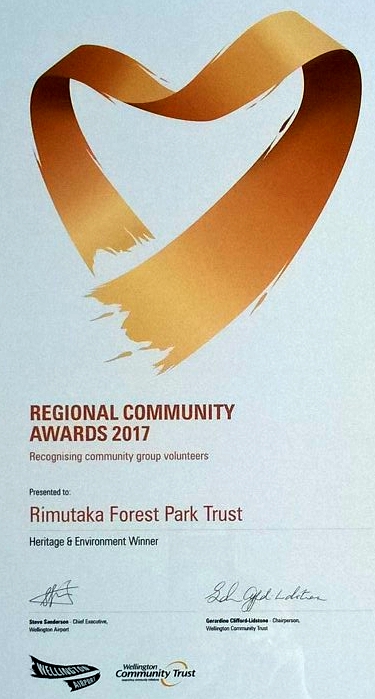
The Heritage & Environment Award certificate presented to the Rimutaka Forest Park Trust at the Wellington Airport Regional Community Awards 2017.
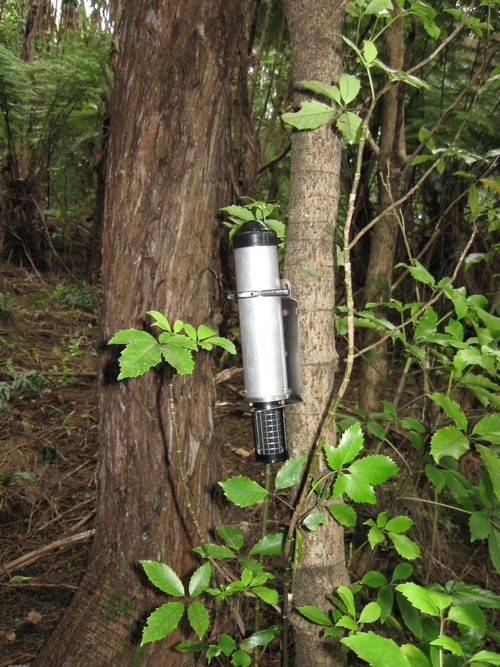
Acoustic survey of the diurnal bird population in the Remutaka Forest Park
In December of 2015 the Trust deployed acoustic recorders at 75 sites in the Remutaka Forest Park, in order to estimate the relative abundance of diurnal bird species. This was the first time such a comprehensive survey of day birds had been carried out in our region. We followed the counting protocol used by researchers at Victoria University of Wellington. (More...)
Read the full report here: Report: Acoustic Monitoring - RFPT
(Adobe Acrobat Reader format: PDF, approx. 4Mb)
RFPT End of Year BBQ - 2018
Members and volunteers with the Rimutaka Forest Park Trust are invited to attend this year's E.o.Y. barbecue, which will be held as usual at the Catchpool Centre, on Sunday 3rd December, from 4pm.
Bring your family along and join in the fun and games!
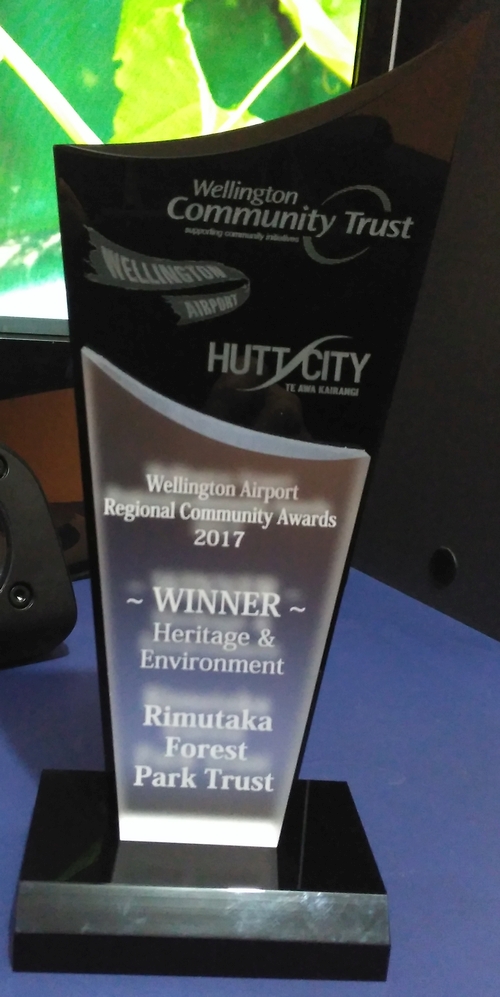
Trophy won by the Rimutaka Forest Park Trust volunteers at the
Wellington Airport Regional Community Awards, 2017.
Family Tree Planting Day - Catchpool
Sunday 8th September, 2013
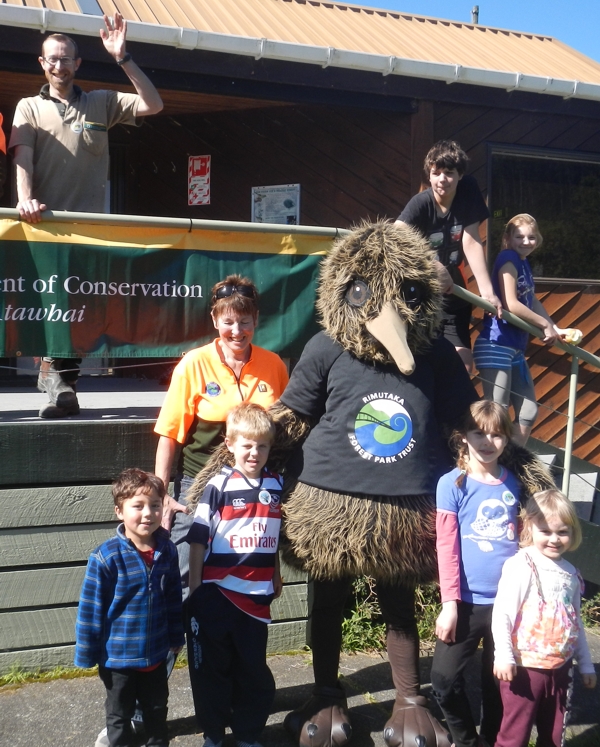
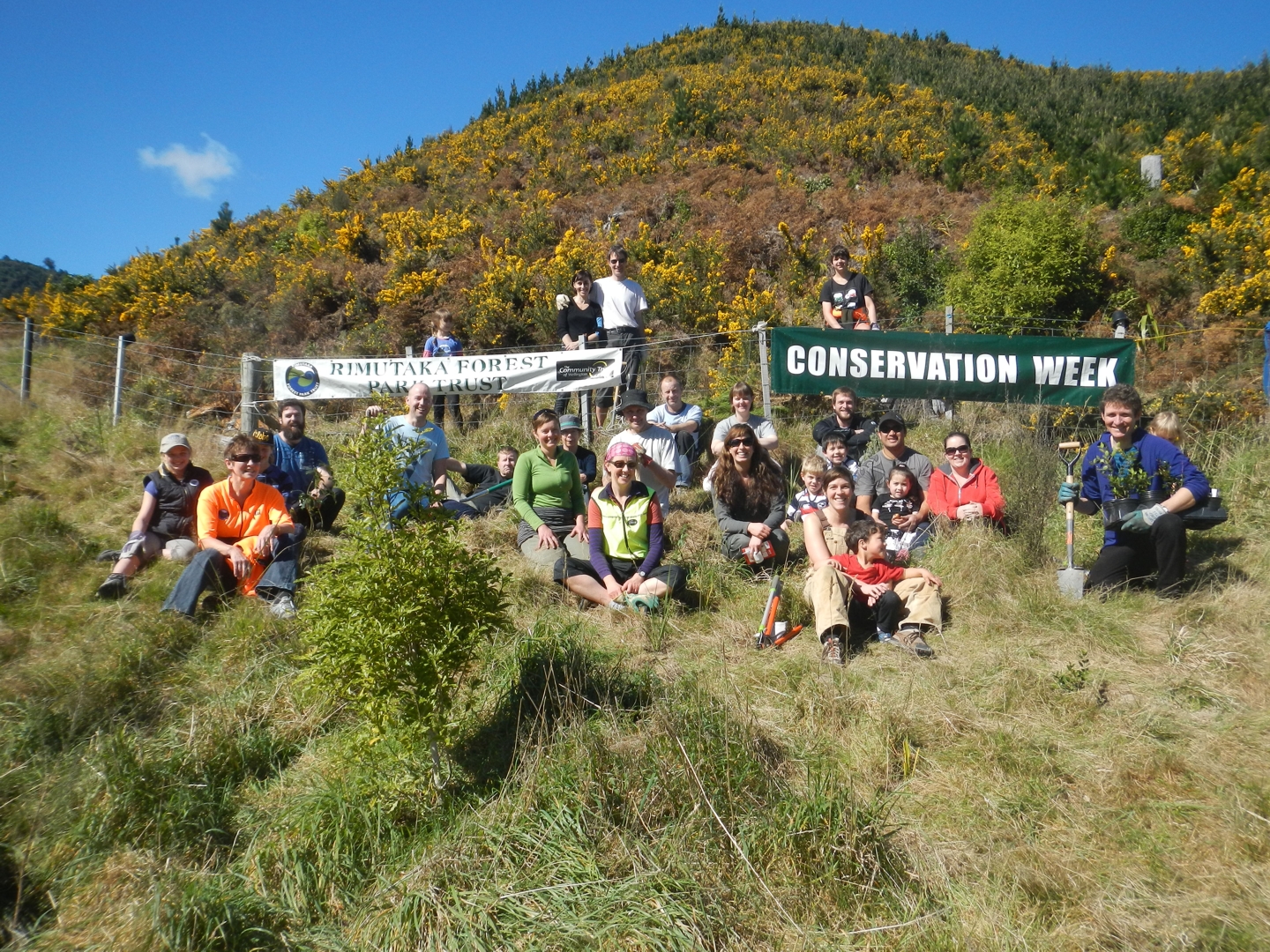
Rosemary Thompson and Rimu the Kiwi surrounded by children at the Planting Day for families at the Catchpool during Conservation Week 2013. (Click for a larger image...) Photo credit: DOC
What a blast! On Sunday a large number of families and many other hardy volunteers came to plant native trees and to enjoy the scenery and abundant wildlife in the Catchpool Valley - the main gateway entrance to the fabulous Rimutaka Forest Park. It was a beautiful, sunny day with very little wind, so conditions were just about perfect.
We supplied the trees, gloves, spades and the team from DOC put on some really nice snacks, a BBQ lunch and hot and cold drinks. Rimu the Kiwi turned up, so the kids had fun during a lovely family outing in very pleasant surroundings. Two very full trailer-loads of native trees were planted.
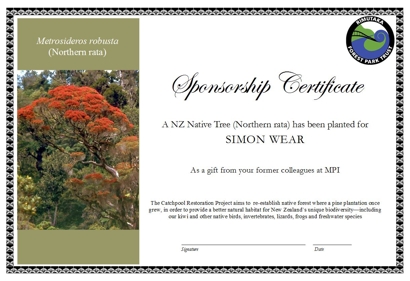
Species planted included five-finger, northern rata, cabbage trees, nikau, kowhai, totara and karamu.

Kiwi dog "Maddie" found male kiwi, "Rush" after
he went missing for several weeks due to transmitter failure. Trust kiwi
handler Kevin Alekna, shown above holding "Rush", said he was
amazed at Maddie’s work rate and blown away when she found the burrow.
He put a new radio transmitter on "Rush". There was a bonus too, as they
found Rushs' mate, "Elemar" in the same burrow! She was without a
transmitter as well, so they weighed and health-checked her too for good
measure!
Photo credit Jo Sim. (Click for a larger view...)
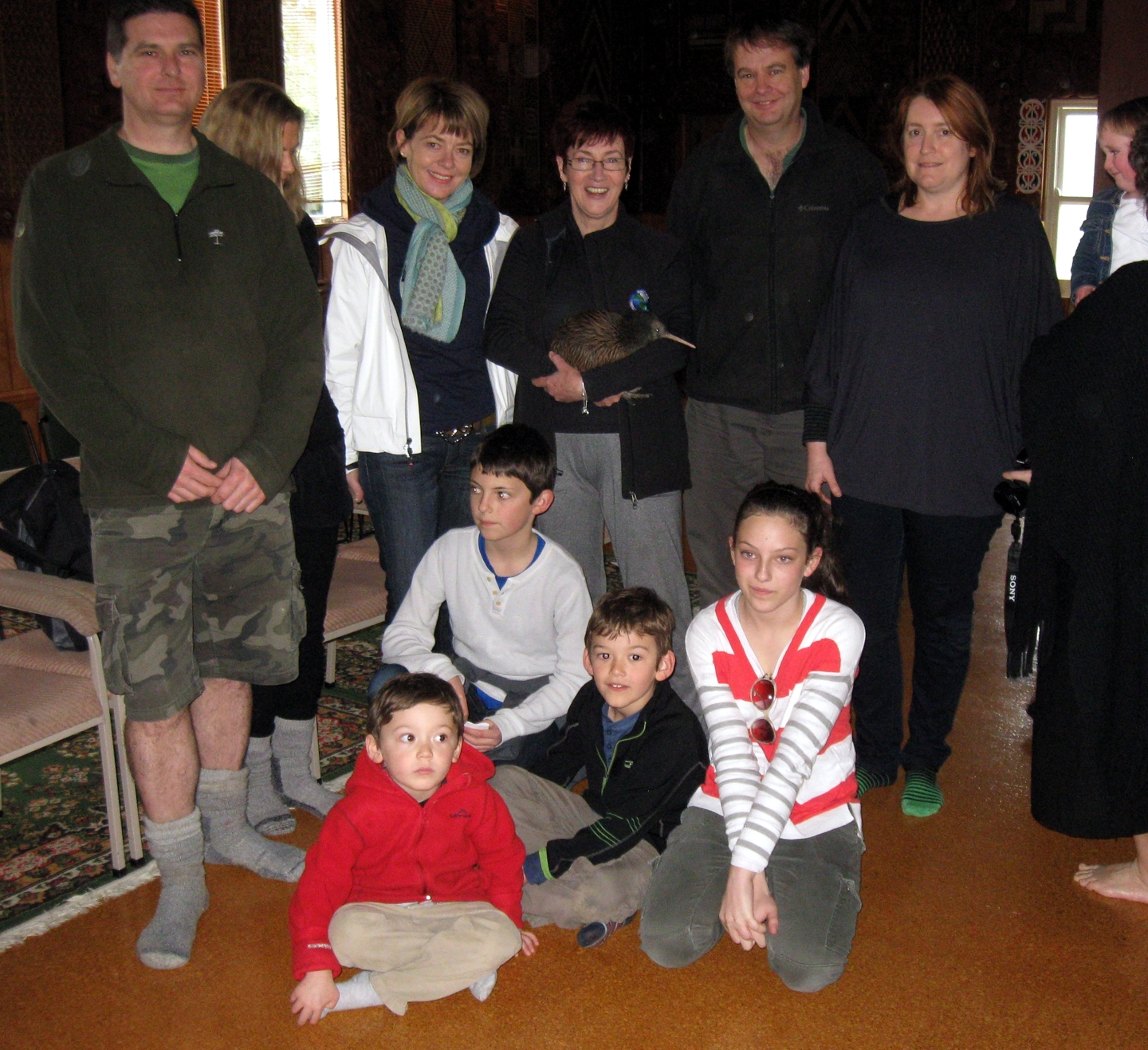
The team from Z Energy with their kiwi, Tahi, following the blessing ceremony at the Wainuiomata Community Marae. (Click for a larger image.) Photo credit: PC
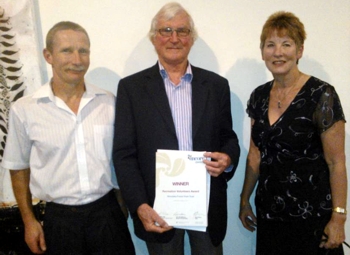
Mike White, Ian Armitage and Rosemary Thompson show off the 2012 Encore Award presented to them by Fran Wilde, Chair of the Greater Wellington Regional Council.
Photo credit: Alan Thompson
That night, our President, Ian Armitage, sent out the following email
to fellow Trust volunteers...
"A big congratulations to all volunteers in
the Rimutaka Forest Park Trust. At the Encore Awards ceremony held at the City Gallery,
Wellington City Civic Centre this evening we were judged the winner of
the Recreation Volunteers Award. Well done to you all. There
were four finalists and we were both surprised and delighted to be
named. A close runner up was the Makara Peak Mountain Biking
Group".
The Recreation Volunteers Award presented to us by Ms. Fran Wilde, Chair of the Greater Wellington Regional Council, is one of seven categories of the Encore Award (Community Partnerships Award, Kaitiaki Award, Landowners' Conservation Award, School Environmental Project Award, Excellence in Compliance Award, Environmental Protection Award, Recreation Volunteers Award)."
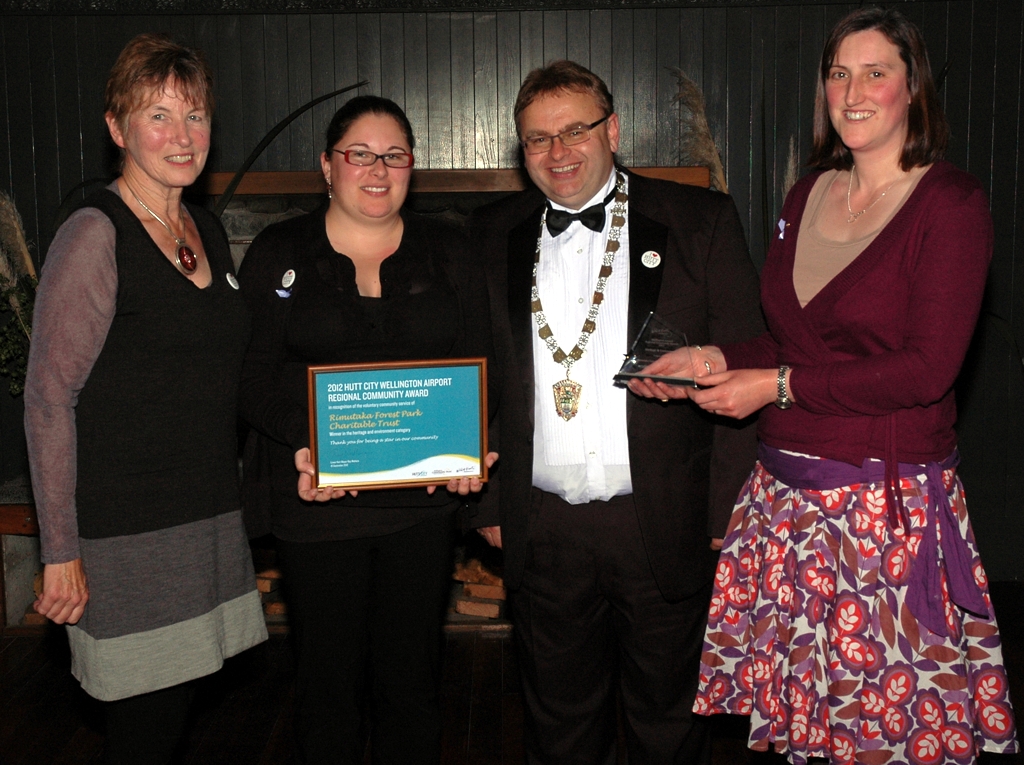
The Mayor of Hutt City, Ray Wallace presents a 2012 Hutt City
Wellington Airport Regional Community Award to The Rimutaka
Forest Park Charitable Trust at a ceremony at Silverstream on Tuesday,
18th September. The Trust was the winner in the heritage and environment
category. Pictured from left to right are Rosemary Thompson (Vice
President) Kelly Anso (Trust Committee) Ray Wallace (Mayor) and Janet
Lawson (Trust Committee and Dawn Chorus Coordinator).
Click for a larger image. Photo Credit:-
Ross de Rouffignac.
Updated 5MBC Data
To view a summary of Ian Armitage's latest 5 Minute Bird Count results for the Catchpool Valley and environs, please click here...
New website for community groups

There are hundreds of community restoration groups and individual landowners in New Zealand dedicating time and effort to restore our native ecosystems. The Nature Space website supports these people.
Nature Space is a website for groups, individuals and landowners undertaking ecological restoration in New Zealand. It provides valuable information and resources to assist these community groups in their efforts to preserve and protect our precious and varied landscapes.
The conservation work carried out by these communities is vital not only for the intrinsic value of our biodiversity, but also for the health and prosperity of New Zealand.
To view the website, or to add your group, click here:
 ,
,